

EVENT AGENDA
Event times below are displayed in PT.
October 28, 2026
Meta Campus, Menlo Park, CA
@Scale: Product is an exciting evolution of the @Scale conference series, uniting the best of Product, RTC, Mobile, and Video under a single AI-native theme. We are continuing to design the conference for engineers and product builders who are passionate about using AI to ship faster, prototype smarter, and launch more often—with AI now driving a growing share of the code and product decisions behind large-scale systems.
Attendees will explore how teams are delivering 2–3× higher product velocity than in the past decade, and how product and code development is increasingly happening across every level of engineering—including from builders who haven’t written code in years, now enabled by AI tooling and “vibe coding” workflows. The conference will showcase prototyping as a first-class product development primitive, complementing (and sometimes replacing) traditional direction-setting.
The program will spotlight how we’re building end-to-end with AI: from idea → prototype → iteration → launch. Expect sessions that trace the full product lifecycle including what’s next in AI-native product development.

Event times below are displayed in PT.


Language is one of the last boundaries on human connection — and translation blurs it. This talk covers how Meta produces and distributes AI voice-translated Reels at scale: streaming speech translation that improves accuracy and latency at once, and the retrieval-side exploration that solves cold start so a dubbed render actually finds its audience.


Wally is a self-learning loop of agents - an optimizer, verifier and learner loop that identifies opportunities to save CPU or GPU cycles, verifies it for correctness, safety, etc, runs a public A/B test with the solution and then launches a win. The fundamental component is the self-learning loop that updates the harness based on wins/fails. Wally has run 1000s of public tests with a 30% success rate and has saved several millions of dollars.

To be announced
The best AI media models have crossed the photorealism threshold. The real competitive advantage now lies in how rapidly a model recipe can adapt to product and user feedback.
Log files and traditional metrics solved evaluation for LLMs, but visual breaks those frameworks.
A video generation pipeline can run with zero software errors, perfect resolution, and flawless prompt adherence, yet still fail completely. The camera crop might feel off, the motion might stutter, or a ‘cinematic lighting’ edit might accidentally turn skin into unnatural plastic.
Visual quality is fundamentally perceptual.
This is where Visual Judges - powered by Visual Language Models (VLMs) - enter the stack.
Novel innovations are driving a flywheel that can accelerate products with media at the center!

Machine learning is opening a new chapter in video compression, with the potential to improve quality, reduce bandwidth, and enable better video experiences across diverse devices and network conditions. But taking ML-powered codecs from research to real-world products requires navigating tough tradeoffs in latency, compute cost, hardware acceleration, compatibility, and quality measurement. This talk explores the product and engineering considerations behind scaling ML video codecs, and what it takes to turn promising models into durable product impact.

When you're creating Media in Edits, it should just work — you hit preview and it plays back instantly, captions land accurately, no hiccups while you edit your media. That's been our north star, and we want to share what we did to get there. We improved creation reliability across the full stack — iOS, Android, and the server-side — and users can feel the difference. The big unlock? We built AI agents that basically run our reliability loop for us. They catch regressions, triage the alerts, and trace issues across client and server all the way down to the offending diff — often before the problem even hits production. The results speak for themselves: preview playback failures improved by 88%, which translates to a noticeably smoother creation experience for millions of people.


Deploying AI video at scale often introduces severe infrastructure bottlenecks and cost challenges, driven primarily by continuous data shuttling between discrete GPUs and host CPUs. By leveraging latest-generation Intel® Xeon® processors with Intel® Advanced Matrix Extensions (Intel® AMX), organizations can eliminate this overhead—executing compute-intensive workloads such as Video Super-Resolution, inverse tone mapping, and bitrate optimization directly on the CPU alongside encoding pipelines.
Building on this efficient compute foundation, the Intel® Media AI Framework transforms raw media into trusted, searchable AI-ready intelligence, while simplifying deployment of media workloads. Through agentic orchestration, intelligent model routing, reusable MCP tools, and video RAG, the framework powers configurable workflows like semantic search, summarization, metadata enrichment, contextual ad placement, and other MCP-based agent flows. This session demonstrates the larger value of bringing Xeon-based acceleration through the Intel® Media AI Framework to improve user experience, convert media into actionable intelligence, and empower customers to build and scale cost effective media AI pipelines optimized for Intel® Xeon®.


An exciting fireside chat with Meta senior leaders.
Adopting AV1 for real-time communication at Meta has been a multi-year effort spanning codec selection, device eligibility, rate control, and error resilience. We’re sharing the technical and operational challenges while deploying AV1 and expanding coverage, and how we addressed them for real-time communication. We’re presenting several technologies for improving AV1 call quality, including rate control and error resilience.Test Ref: https://engineering.fb.com/2026/06/22/video-engineering/adopting-av1-for-real-time-communication-rtc-meta/

Maintaining products at scale means continually investigating bugs, responding
to regressions, and finding problems before users report them. This talk explores how AI agents can support a continuous maintenance loop, from discovering and triaging issues to proposing fixes and verifying outcomes. We’ll examine the engineering challenges behind these systems: providing the right product context, coordinating specialized agents, following work through to completion, and measuring quality. We’ll also discuss how to expand autonomy as reliability improves, while keeping engineers in control of consequential decisions. Attendees will leave with practical design principles for bringing agentic maintenance into their own engineering workflows.


Shipping faster at scale requires AI not just writing code, but catching the bugs that would slow you down. This talk explores Meta's Just-in-Time (JiT) Catching Test system — where AI autonomously generates tests designed to fail, surfacing bugs before code lands. At Meta, AI now powers every stage of the quality gate — from generating code-change-aware catching tests, to LLM-based assessors that select which catches deserve human attention. In our presentation, we'll show how this system — deployed across hundreds of millions of lines of code — proactively prevents serious production failures while enabling engineers to ship with speed and confidence.


Scrubbing a video looks trivial, but the real problem is showing correct frames, frequently, while the user keeps moving the target across compositions of overlapping tracks and effects, under hard mobile device limits. A scrub is a continuous stream of seek requests of different shapes, fast or slow, forward or backward, each resolving the same decisions differently: distance to the nearest keyframe, which frame to show and how soon, when to abandon work already in flight; across device tiers, content, and composition shape, no fixed policy covers that space. In Edits we engineered an engine that serves frames fast, smoothly and accurately while requests keep arriving, interrupting stale work to render at every transition, seeking GOP-aware off a keyframe list, tracking the finger on backward scrubs while decoding runs the other way, and trading precision for speed where the user cannot tell; it delivered a 10x improvement on seek latency and frames shown per second. No single policy covers the breadth, so we are going AI-native: refactoring into a portable system that plugs into Meta's Family of Apps, developing agentic just-in-time observability into production behavior and skills that help coding agents extend the engine and validate their own work. The vision is an agentic system that profiles production data at scale, generates algorithmic variations, and experiments to to evaluate what can ship, with a human on the loop.

Parisa Zare is a Technical Program Manager leader at Meta, focused on driving developer... read more


Yair leads creator product for Facebook, a role he's been in for almost three... read more
Matt Schlicht is the creator of Moltbook, the social network built exclusively for AI... read more
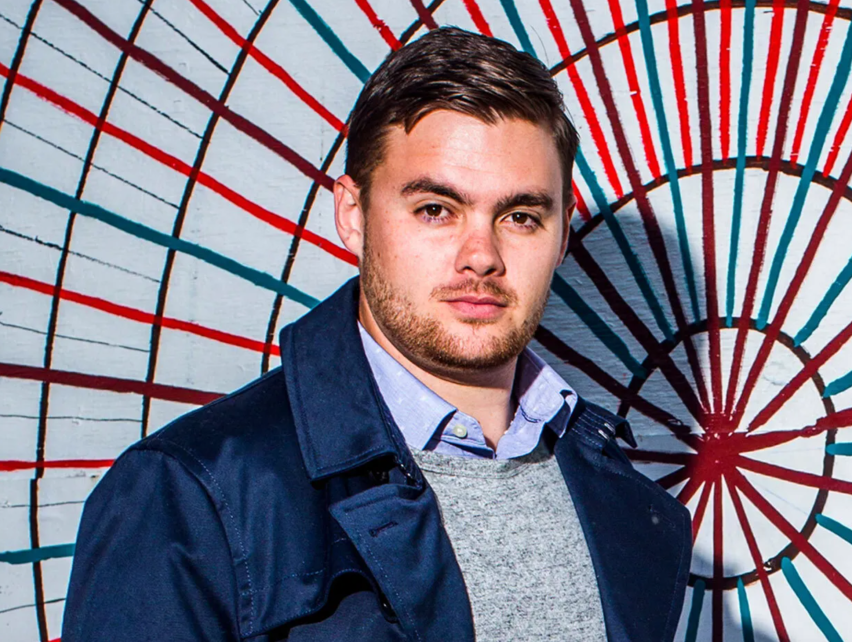
Nicholas Holland is a seasoned Chief Product Officer, technology executive, and serial entrepreneur with... read more

I'm a machine learning engineer who operates at the seam of research, product, and... read more

CEO and Co-Founder of Reactor - serving world models efficiently, at scale. Previously Co-Founder... read more

Jubin Chheda is Distinguished Engineer leading Agentic Products on Facebook. He also leads the... read more

Rushaan Mahajan is an Technologist with a love for building in Multi-Modal models! Serial... read more

Nabakumar Khongbantabam is a product and technology leader focused on advancing video experiences through... read more

Ravi Shah is a software engineer at Meta working on media foundation infrastructure for... read more

I am an Android Software Engineer@ Meta working in Video Client Infra. We work... read more

Sundararajan Subramanian is a Software Engineer on Meta's FB Social team, where he leads... read more

Arnaud Perrier is General Manager, Media & Entertainment Solutions Division at Intel's Datacenter Group.... read more

Dr. Richard Chuang is a Principal Architect at Intel focused on AI, media intelligence,... read more

Dr. Yu-Chen (Eric) Sun is a Software Engineer and Tech Lead at Meta. He... read more
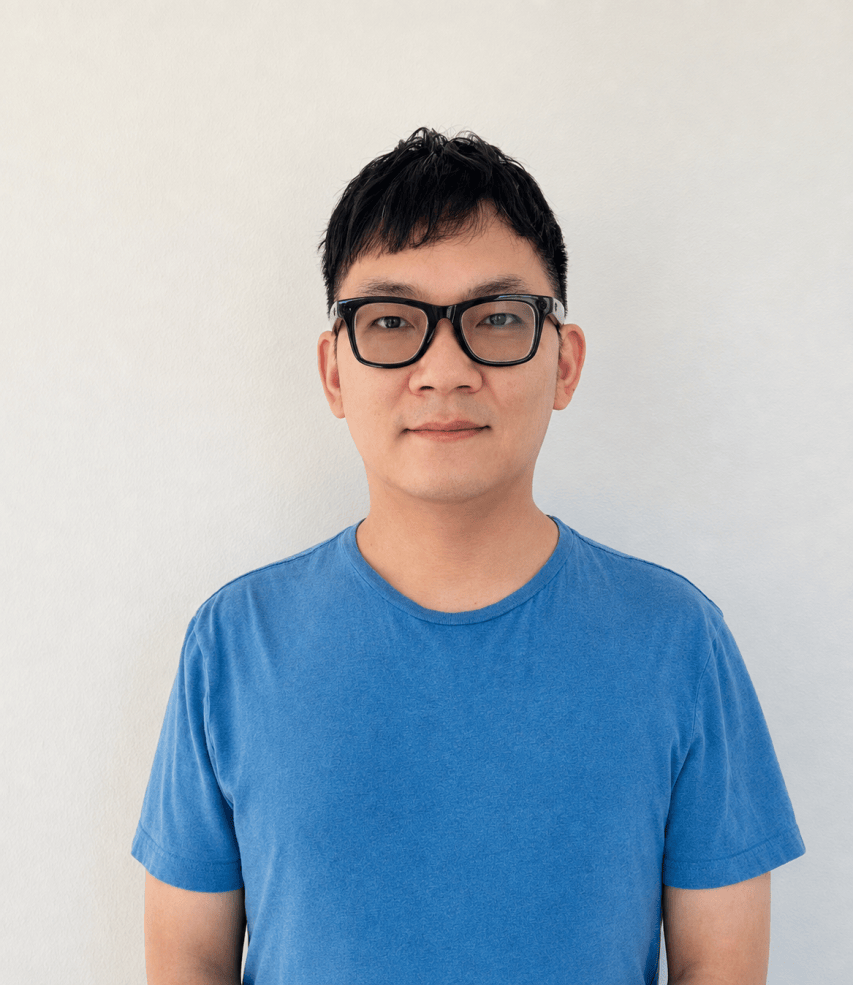
Sumeet Arora is a software engineer at Meta working on AI agents for product... read more

As a Forward Deployed Engineer – Strategist at ElevenLabs, I help customers deploy voice... read more

Sophie Zeng is a Machine Learning Engineer at Meta, where she builds AI systems... read more

Sreeja is a software engineer at Meta with over 10 years of experience building... read more

Manindra Parhy is a distinguished engineering manager at Nvidia. He manages video hardware IP... read more

Boris is a software Engineer with ~10 years of experience building large scale systems... read more